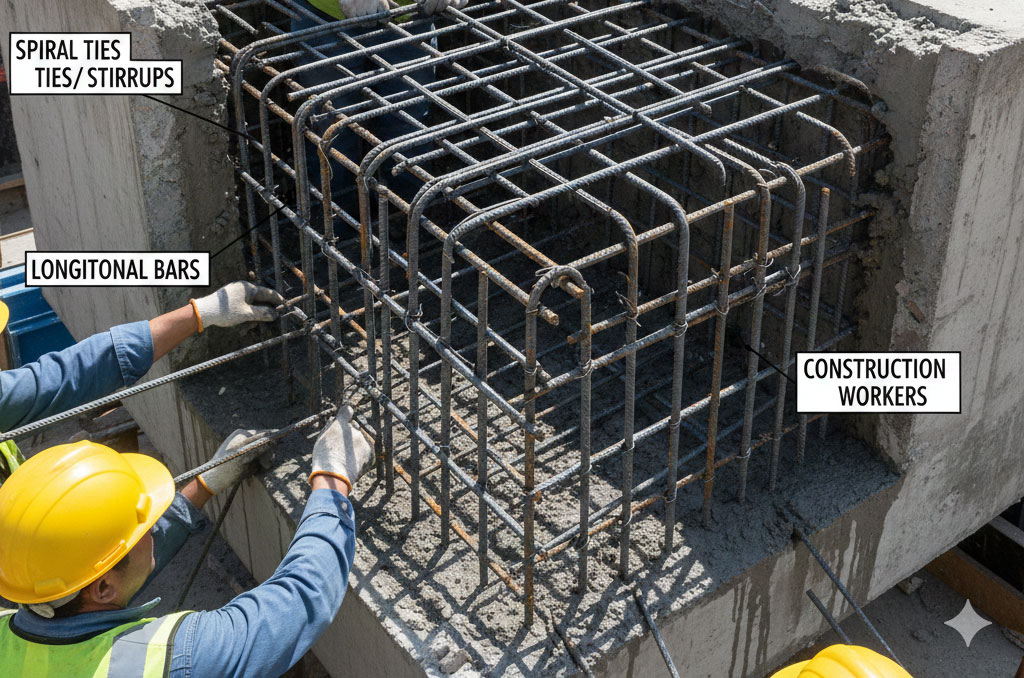
Why and Where to Put Rods on Beams: A Simple Guide for Beginners
Have you ever looked at a building being built and wondered about all that metal sticking out of the grey concrete? It looks like a giant, messy skeleton. Well, that is exactly what it is. Just like your body needs bones to stand up straight and not flop over, a concrete house needs steel bones to stay strong. Specifically, we are talking about the steel bars placed inside the horizontal parts of a building. In this guide, we are going to explore why and where to put rods on beams so that even a total beginner can understand how buildings stay up.
If you are planning a small home project or just curious about how construction works, understanding the relationship between concrete and steel is step one. It isn't magic; it is just simple physics that keeps the roof from falling on our heads. Let’s break down the mystery of rods on beams without using confusing engineering words.
What Do Rods on Beams Actually Do?
 To understand rods on beams, you first have to understand the personality of concrete. Imagine concrete is like a really hard stone or a brick. If you put a heavy weight on top of a stone, it handles it perfectly well. You can squeeze it as hard as you want, and it won't crush easily. In the construction world, we call this "compression strength." Concrete loves being squashed. It is tough, durable, and can hold up massive skyscrapers as long as the weight is pushing straight down on it.
However, concrete has a secret weakness. While it loves being squashed, it hates being stretched or pulled apart. Imagine you have a long, thin cookie. If you push on the ends, it stays solid. But if you try to bend it or snap it in half, it breaks immediately. Concrete is exactly like that cookie. If a beam bends even a tiny bit under the weight of a floor or a roof, the concrete wants to crack and snap. It cannot handle the stretching force (which pros call tension) on its own.
This is where the steel rods come in to save the day. Steel is the opposite of concrete in many ways. Steel is incredibly good at being pulled and stretched without breaking. It is like a super-strong rope. So, builders came up with a genius idea: put the steel inside the concrete. When you use rods on beams, the concrete handles the squashing weight, and the steel handles the stretching and pulling. They become a perfect team, making the beam strong enough to handle almost anything.
The Main Reasons Why We Need Rods on Beams
The most obvious reason for using rods on beams is to stop the beam from snapping in half, but there is more to it than just that. When a beam is loaded with weight—like furniture, people, or a second floor—it naturally wants to sag in the middle. Even if you can't see the sag with your eyes, it is happening. Without steel rods, that slight sag would turn into a catastrophic crack within seconds. The rods act like tight muscles that clamp the concrete together, preventing those cracks from opening up and keeping the structure rigid.
Another reason is safety during emergencies, like earthquakes or strong winds. If a beam was made only of concrete, it would be "brittle." This means if it failed, it would explode or snap suddenly without warning, just like dropping a ceramic plate. That is very dangerous. By adding rods on beams, the beam becomes "ductile." This means if the load is too heavy, the beam will bend and deform slowly before it breaks. This bending gives people inside the building time to get out safely. The steel buys you time and holds the pieces together even when things go wrong.
Finally, we need rods to connect different parts of the building together. A house isn't just a stack of separate blocks; it needs to be one solid unit. The rods on beams usually extend out and tie into the columns (the vertical posts) or the walls. This tying action locks the whole frame of the house together. It prevents the beams from slipping off the columns during vibrations or shifting ground. Think of the rods as the glue or the stitching that turns separate pieces of concrete into a single, sturdy cage.
Knowing Where to Put Rods on Beams for Maximum Strength
Now that we know why we need them, the big question is: where do they go? You cannot just throw metal into the wet cement randomly and hope for the best. Placement is everything. If you put the rods on beams in the wrong spot, they might as well not be there at all. The placement depends entirely on how the beam bends.
The Bottom Zone: Fighting the Sag
The most important place you will usually see rods on beams is running along the bottom, specifically in the middle section of the beam. Let’s use a simple analogy. Imagine you are holding a ruler at both ends and someone presses down on the middle. The ruler bends into a smiley face shape. If you look closely, the top edge of the ruler is getting squished together, but the bottom edge is getting stretched out.
Because concrete hates being stretched, the bottom of the beam is the danger zone. This is where cracks will start if there is no steel. Therefore, engineers place thick steel rods along the bottom length of the beam to catch that stretching force. These bottom bars are doing the heavy lifting to keep the floor flat. They act like a hammock that catches the concrete and stops it from ripping apart at the bottom.
When placing these bottom rods, they must not touch the very bottom of the mold. They need to be covered by a little bit of concrete (usually about an inch or two). This is called the "cover." If the metal touches the air or soil, it will rust. So, the rods float just above the bottom, deep inside the concrete, right where the stretching happens. This is the standard way to place rods on beams for a beam that is supported on two ends.
The Top Zone: Protecting the Edges
While the bottom is important in the middle of the beam, the top is crucial near the supports. Supports are the columns or walls holding the beam up. Let's go back to our ruler analogy. If you bend the ruler really hard, right where your thumbs are holding it, the forces flip. Near the supports, the beam actually wants to curve differently, kind of like a frown shape over the column. This creates tension (stretching) on the top of the beam, not the bottom.
This is why you will see rods on beams running along the top part, especially near the columns. These top bars are there to stop the beam from cracking right where it joins the wall. If you skipped these top rods, the beam might stay straight in the middle but snap off right at the connection points. It is a balancing act: bottom bars for the middle sag, and top bars for the support stress.
Spread the love