14+ Best Wall Finishes Materials for Modern House Design
Choosing the right wall finishes materials can completely change how a house looks and feels. A plain wall can become a beautiful feature with the right finish, while the wrong material can make an otherwise attractive home look dull, outdated, or difficult to maintain. Whether you are building a new house or renovating an existing one, your wall finish deserves more attention than simply choosing a colour of paint.
Wall finishes do more than improve appearance. They can protect walls from moisture, dirt, scratches, heat, and everyday wear. Some materials also create texture, warmth, sound control, or a luxurious appearance. This is why homeowners should consider the location of the wall, the purpose of the room, maintenance requirements, and available budget before making a choice.
In this guide, we will look at some of the best wall finishes materials for modern house design and explain where each option works best. You do not need to be a construction expert to understand them. Think of a wall finish as the clothing of your building: the wall provides the structure, while the finish gives it character, protection, and personality.
Best Wall Finishes Materials for Modern House Design
Modern homes are no longer limited to ordinary emulsion paint. Homeowners and designers now combine different textures, colours, patterns, and materials to create interesting interiors and exterior elevations. The important thing is to select a finish that matches the room and can withstand the conditions around it.
Before selecting any material, consider whether the wall is inside or outside, exposed to water or sunlight, likely to experience heavy traffic, or mainly intended to create a decorative feature. A material that works beautifully in a living room may perform poorly in a bathroom or external wall.
The following wall finishes materials can give your home anything from a simple and affordable appearance to a bold luxury finish. You can also combine two or more finishes rather than using the same material throughout the entire house.
Paint
Paint remains one of the most popular wall finishes because it is affordable, versatile, and relatively easy to maintain. With thousands of available colours and different levels of sheen, paint can suit almost any architectural style. A soft neutral colour can make a small room feel larger, while a darker accent wall can create a dramatic focal point.
Modern paints are also available for specific conditions. Moisture-resistant paints can be useful in kitchens and bathrooms, while exterior paints are formulated to withstand weather exposure. Proper surface preparation is important because even expensive paint will not produce a good result on a poorly prepared wall.
For a modern house, paint works particularly well when combined with another feature finish. For example, three walls may have a simple neutral colour while one wall uses stone, wood, textured plaster, or decorative panels.
Textured Plaster
Textured plaster is a good choice when you want your walls to have more character than a completely smooth painted surface. Different application techniques can produce subtle or strongly textured patterns, allowing the wall itself to become part of the interior design.
This finish can be used in living rooms, bedrooms, hallways, reception areas, and selected exterior surfaces. Depending on the product and application method, textured plaster can create a rustic, contemporary, or luxurious appearance.
One advantage is that texture can help disguise minor surface imperfections. However, it should still be applied over a properly prepared wall. Deep or complicated textures may also require more effort to clean, so they should be used carefully in areas where dust and dirt are common.
Natural Stone
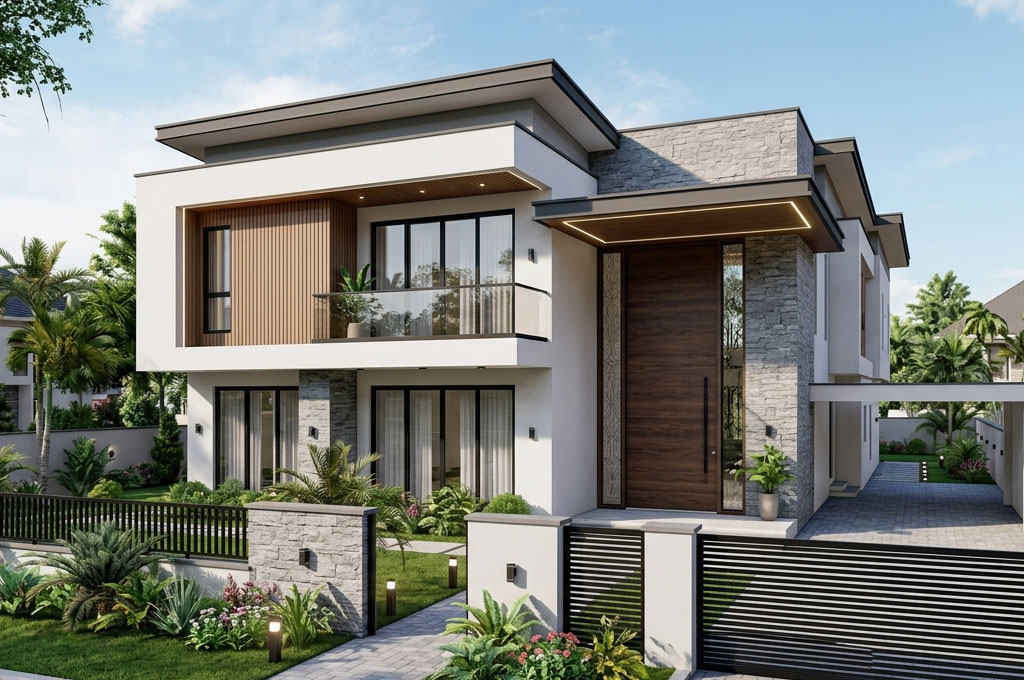
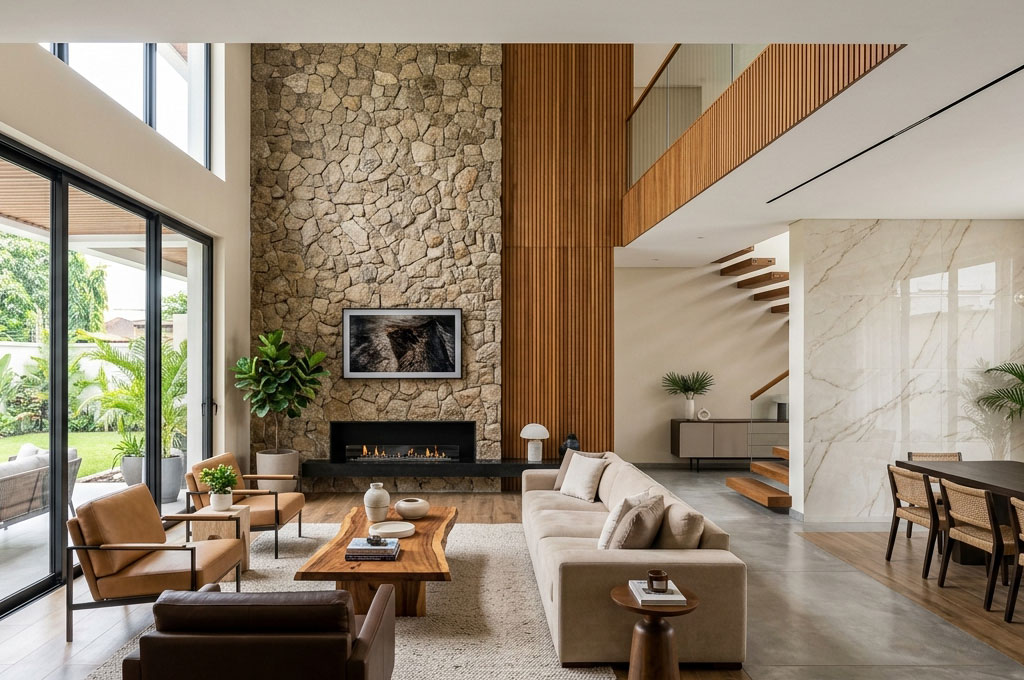
Natural stone creates a strong and timeless appearance. Materials such as granite, marble, slate, and other natural stones can be used on feature walls, entrance areas, fireplaces, external elevations, and other prominent parts of a house.
Stone is particularly useful when the goal is to create a feeling of strength and luxury. Its natural variations mean that no two pieces look exactly the same, giving the wall an authentic appearance that manufactured finishes sometimes struggle to reproduce.
The main consideration is cost and weight. Natural stone can be more expensive than paint or some manufactured alternatives, and proper installation is essential. It is often more practical to use it selectively rather than covering every wall.
Stone Veneer
Stone veneer provides the appearance of stone while generally using less material than a full natural-stone construction. It can create an attractive feature around entrances, living rooms, staircases, outdoor areas, and building facades.
For homeowners who like the appearance of stone but want more design flexibility, veneer can be an interesting alternative. Manufactured stone veneer is available in different colours, textures, shapes, and patterns.
Installation should be done correctly because the supporting wall, adhesive or fixing system, moisture control, and joints all affect the final result. A poorly installed veneer can look artificial, while a carefully installed one can give a modern house a sophisticated appearance.
Ceramic Wall Tiles
Ceramic tiles are among the most practical wall finishes for areas where cleaning and moisture resistance are important. They are commonly used in bathrooms, kitchens, toilets, laundry areas, and other wet or easily soiled spaces.
Modern ceramic tiles are available in many sizes, colours, patterns, and surface designs. Some can even imitate wood, stone, concrete, or other materials, giving homeowners plenty of design choices without using the actual material.
Tiles also make routine cleaning easier. However, attention should be given to grout because dirty or damaged grout can affect the appearance of an otherwise beautiful tiled wall. Choosing appropriate tile sizes and patterns can also make a room appear wider, taller, or more spacious.
Porcelain Tiles
Porcelain tiles are another excellent option, particularly where durability and a premium appearance are required. They are generally denser and less porous than ordinary ceramic tiles, making them suitable for many demanding applications.
Large-format porcelain tiles can create a sleek modern appearance because fewer joints are visible. This can be especially effective in contemporary living rooms, bathrooms, kitchens, and feature walls.
Because large porcelain tiles can be heavy and difficult to handle, professional installation is often advisable. The wall must also be sufficiently strong, flat, and properly prepared before installation.
Wood Wall Panels
Wood brings warmth and natural character into a building. Wood panels can be used to create feature walls in bedrooms, living rooms, offices, entertainment areas, and other interior spaces.
The appearance can range from simple and contemporary to warm and traditional depending on the type, colour, grain, and installation pattern. Vertical wood panels, for example, can visually increase the height of a room.
Wood requires more attention to moisture and maintenance than some alternatives. In damp areas, unsuitable wood or poor installation can lead to swelling, staining, or deterioration. Proper treatment and careful selection are therefore important.
PVC Wall Panels
PVC wall panels are popular because they are lightweight, relatively easy to clean, and available in many decorative patterns. Some products are designed to imitate marble, wood, stone, or other finishes.
They can be useful in bathrooms, kitchens, utility areas, and interior feature walls where quick installation is desirable. Their smooth surfaces can also make cleaning easier.
However, quality varies considerably between products. Very cheap panels may look less convincing or become damaged more easily. Always consider the quality, thickness, installation method, and suitability for the room before purchasing.
Brick Slips
Brick slips can give a wall the appearance of exposed brick without constructing an entire wall from full-size bricks. They are particularly attractive for contemporary, industrial, rustic, and minimalist interiors.
They can be used around fireplaces, living-room feature walls, restaurants, offices, entrances, and selected exterior areas. Their texture provides visual interest even when the colour scheme is simple.
The final appearance depends heavily on the joint pattern and colour of the bricks and mortar. Careful installation can make brick slips look authentic, while poor alignment can make the wall appear untidy.
Decorative Wall Panels
Decorative wall panels are designed primarily to add visual interest. They can feature geometric patterns, fluted designs, raised surfaces, or other modern details.
These panels work especially well on feature walls behind televisions, beds, reception desks, dining areas, and staircases. Instead of decorating an entire room, a homeowner can use panels on one strategically selected wall.
They are useful when you want a strong design statement without completely changing the structure of the room. The key is moderation because an overly complicated pattern across every wall can make a room feel visually crowded.
Wallpaper
Wallpaper offers one of the fastest ways to introduce patterns, colours, and textures to an interior wall. Modern wallpaper comes in designs ranging from simple neutral patterns to bold decorative artwork.
It can be particularly effective in bedrooms, living rooms, dining areas, children's rooms, and feature walls. Wallpaper can also help create a specific mood without requiring extensive construction work.
The main concern is moisture and installation quality. Ordinary wallpaper may not be appropriate for damp locations, and poorly prepared walls can cause bubbling, peeling, or visible imperfections.
Microcement
Microcement is a contemporary finish that can create a smooth, seamless concrete-like appearance. It is increasingly associated with minimalist and modern interiors where clean surfaces and limited visual joints are desired.
It can be used on selected walls in bathrooms, kitchens, living areas, and other spaces, depending on the product system. Its continuous appearance can make a room feel modern and uncluttered.
Because the quality of the finished surface depends greatly on preparation and application, it is not usually a material to experiment with casually. An experienced installer can help achieve the smooth, consistent appearance that makes this finish attractive.
Exposed Concrete
Exposed concrete can provide a bold architectural appearance. Instead of hiding the concrete completely, the surface becomes part of the design, creating an industrial and minimalist character.
This approach works particularly well in modern houses where simplicity and raw materials are part of the architectural concept. It can be used selectively on feature walls rather than throughout the entire building.
The surface must be carefully controlled because exposed concrete shows imperfections more readily than a conventional painted wall. The result can be striking when planned from the design stage.
Cork Panels
Cork is a less common but interesting wall finish. Its natural texture gives interiors warmth and can contribute to a softer visual appearance than hard stone or ceramic surfaces.
Cork can be used in home offices, bedrooms, study areas, and other interior spaces. It may also provide some acoustic benefits because cork has sound-absorbing characteristics.
As with wood, moisture and installation conditions should be considered. It is best used where its appearance and functional characteristics suit the room rather than simply choosing it because it looks different.
Glass Wall Panels
Glass can create a clean and sophisticated appearance, particularly in contemporary interiors. Decorative or coloured glass panels can be used as kitchen backsplashes, bathroom features, partitions, or selected feature walls.
One major advantage is the smooth surface, which can be relatively easy to clean. Glass can also reflect light and help create a brighter appearance in suitable spaces.
Safety and installation are extremely important. Appropriate glass products and professional fixing methods should be used, particularly in locations where impact or moisture is expected.
Metal Wall Panels
Metal wall finishes can introduce a strong contemporary or industrial character. Depending on the material and surface treatment, they can appear sleek, textured, reflective, or deliberately aged.
They may be used for feature walls, entertainment areas, offices, restaurants, and modern commercial-style interiors. Used carefully, metal can become a striking contrast against softer materials such as wood or fabric.
Metal is usually better treated as an accent rather than something covering every wall. The right balance can make the design look sophisticated, while excessive use may make a home feel cold.
How to Choose the Right Wall Finish
The best wall finishes materials are not necessarily the most expensive ones. A beautiful marble wall may be unsuitable for a homeowner who wants a low-maintenance and affordable finish, while simple paint may be the perfect solution for another project.
Start by considering the location. Bathrooms and kitchens need materials that can cope with moisture and frequent cleaning. Exterior walls need finishes that can withstand weather conditions. Living rooms and bedrooms provide greater freedom because appearance can take a more prominent role.
You should also consider the overall house design. A modern minimalist building may benefit from large-format tiles, microcement, wood panels, or carefully selected textured finishes. A more traditional house may look better with stone, brick, decorative plaster, or warm colours. The goal is to make the finish work with the architecture rather than compete against it.
Final Thoughts on Wall Finishes Materials
Choosing wall finishes materials is an important part of creating a house that is attractive, practical, and comfortable. There is no single material that is perfect for every room. Paint may be ideal for one space, tiles for another, and wood, stone, or decorative panels for a feature wall.
The smartest approach is to think about the purpose of each room before making your choice. Consider moisture, durability, cleaning, appearance, installation, maintenance, and cost. Most importantly, do not choose a finish simply because it looks attractive in a photograph. Ask whether it will continue to perform well in your actual home.
With the right combination of materials, even an ordinary wall can become one of the most attractive parts of your house. Take time to compare your options, discuss your ideas with a qualified professional where necessary, and choose finishes that support both the beauty and function of your home. If you found this guide useful, share it with someone planning a new house or renovation and explore more house-design and construction guides for practical ideas.